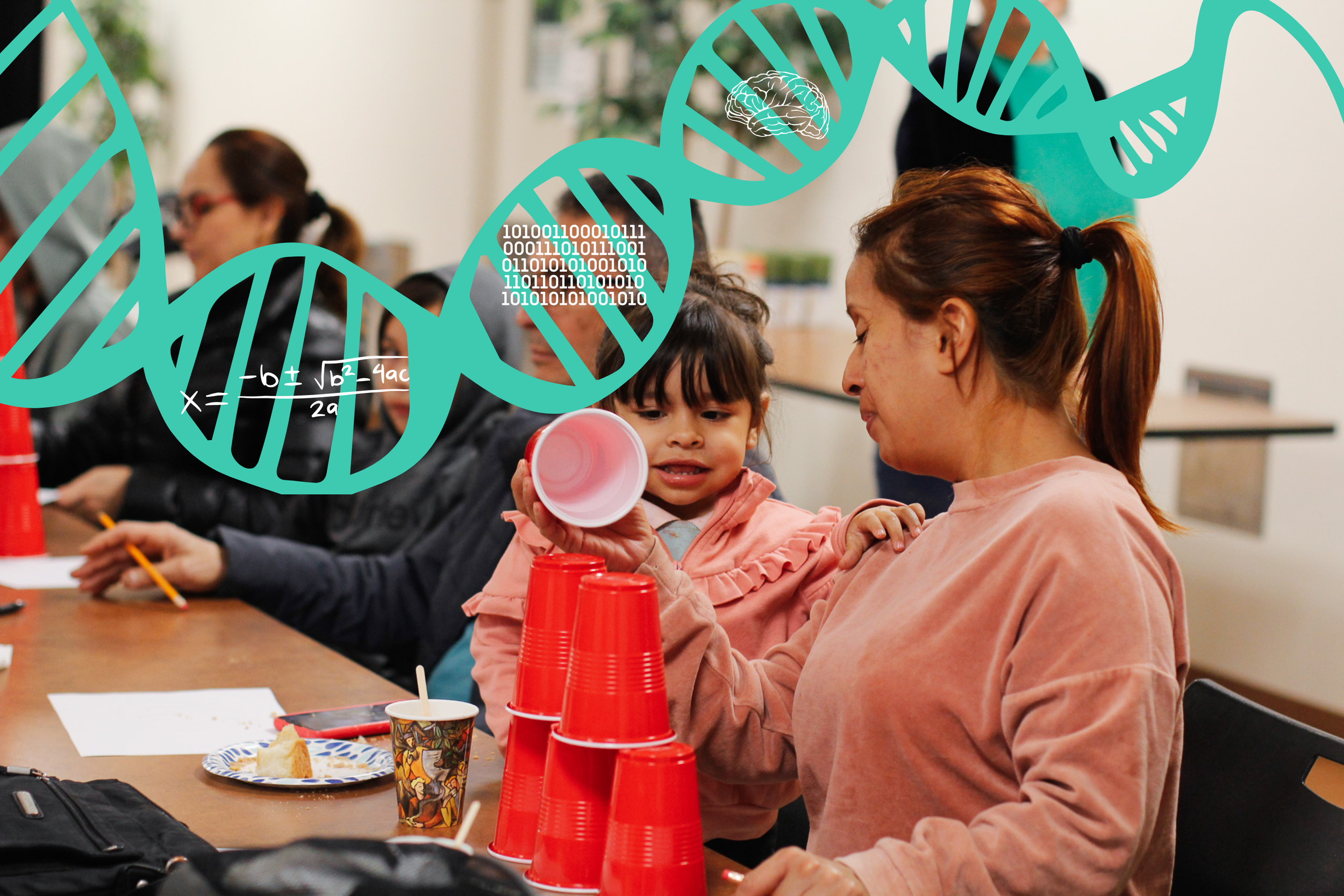
People First. Technology Second.
We believe learning should feel welcoming, relevant, and connected to real life. That's why every yüda program is designed around people, not just technology.
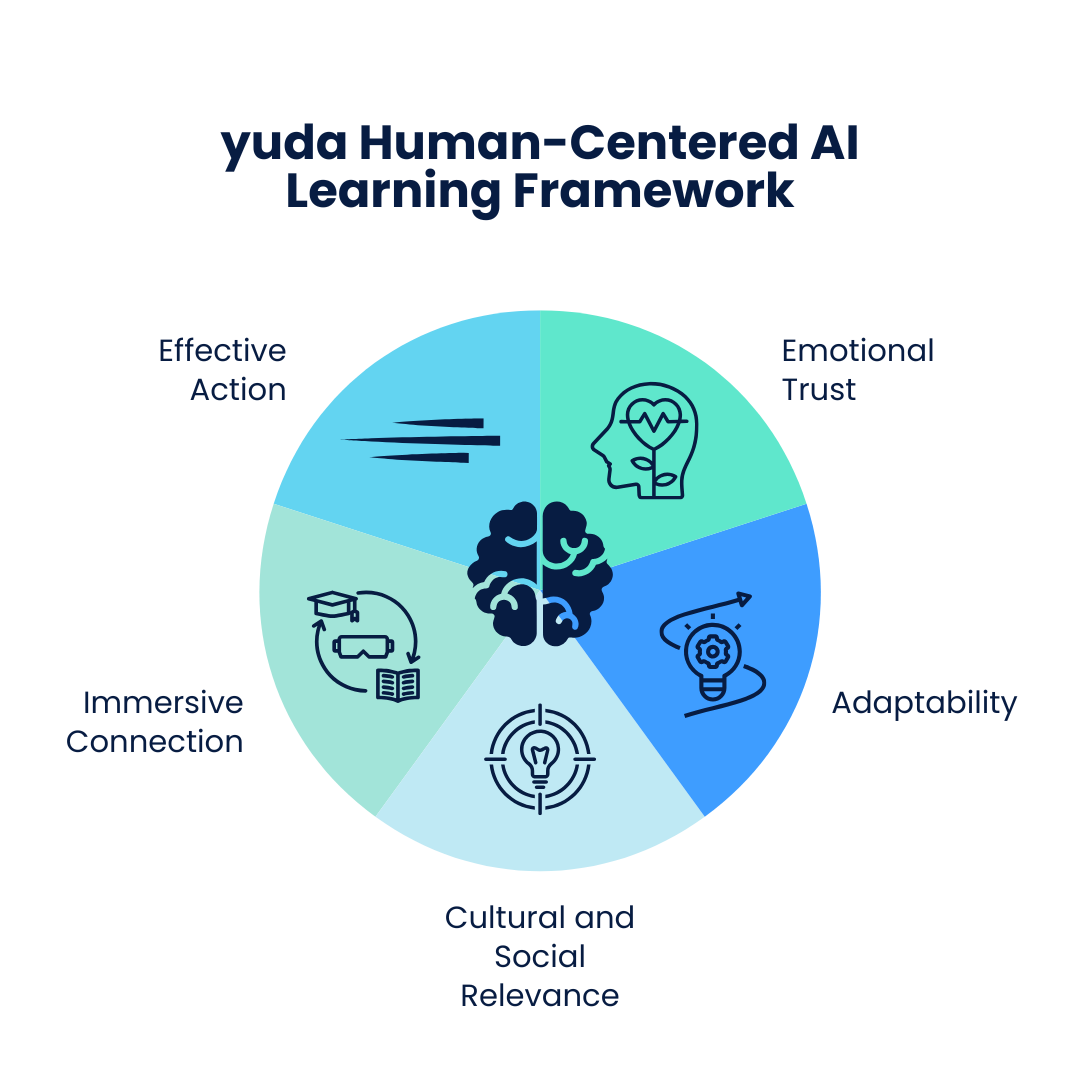
The Learning Framework
-
Highlight how empathy, culturally responsive teaching, and AI-enhanced insights create safe, supportive environments.
-
Showcase differentiated instruction, AI-driven adaptability, and personalized pacing.
-
Emphasize connecting education to learners’ identities, languages, and societal contexts.
-
Introduce experiential learning and AI-driven simulations for impactful, memorable lessons.
-
Demonstrate how learners apply skills beyond the classroom to real-world scenarios.

The Learning Barrier Insight Tool
Understanding the Whole Learner.
People don't all start from the same place.
Some learners are balancing work, caregiving, transportation challenges, housing instability, language barriers, or simply finding the time and confidence to learn something new. These realities can have a major impact on learning, yet they're often overlooked.
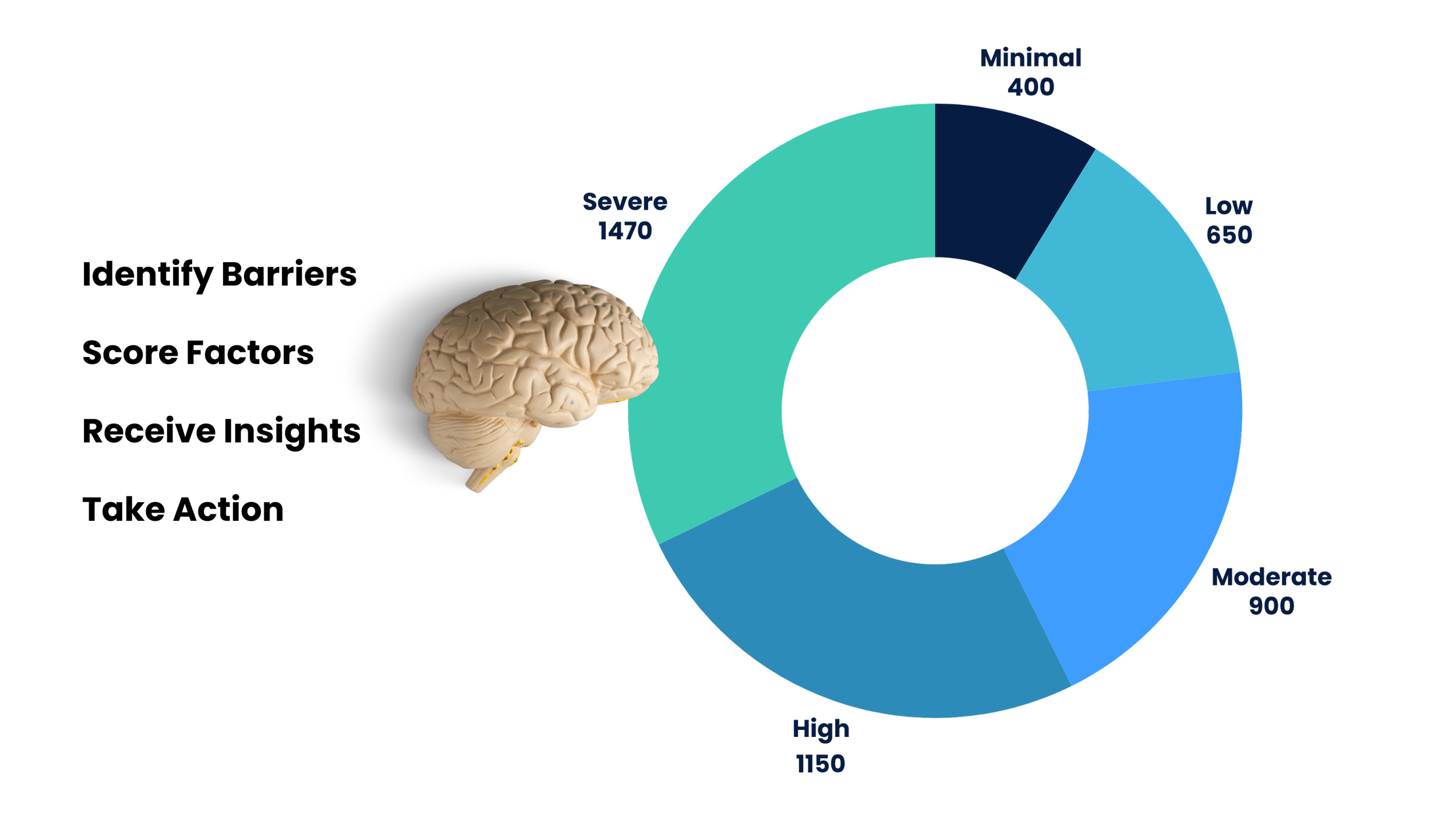
Our Learning Barrier Insight Tool helps us better understand each learner's unique situation so we can provide the right support from the start.
By looking at factors like access to technology, available time, emotional well-being, and other real-life challenges, we can tailor learning experiences, mentorship, and resources to meet people where they are.
Why it matters:
Personalized Support: Unlike one-size-fits-all approaches, we use this tool to meet learners where they are and empower them with tools they actually need.
A Human-Centered Approach: By accounting for real world challenges like mental health, time availability, or housing situations, we help remove obstacles that others overlook.
Building Pathways, Not Barriers: The goal isn't to measure challenges. It's to understand them, reduce them, and create more opportunities for learners to succeed.
Built on Proven Educational Theories
Our Learning Framework is built upon a robust foundation of time-tested educational theories and innovative approaches to ensure effective and inclusive learning. These theories guide our strategies, ensuring that learners are not only engaged but also supported in a manner that respects their individuality and potential. Below are the key principles driving our approach.

Situated Learning
Learning is most effective when it occurs in the context of real-world application.
Theory Summary: Situated learning emphasizes learning through authentic tasks embedded in social and cultural contexts.
Practical Application: Our framework encourages learners to engage in community-driven and experiential learning activities that mirror real-life challenges.
(Source: Northern Illinois University Center for Innovative Teaching and Learning)
How People Learn (HPL)
Understanding the interplay between prior knowledge, active engagement, and meaningful reflection.
Theory Summary: The HPL framework integrates cognitive science, neuroscience, and educational research to explore how individuals best acquire, retain, and apply knowledge.
Practical Application: We align learning content with students' existing knowledge and provide opportunities for active engagement and critical thinking.
(Source: Stanford HPL Introduction Chapter)
Maslow’s Hierarchy of Needs
Emotional and psychological safety are prerequisites for effective learning.
Theory Summary: Maslow’s framework posits that basic needs like safety and belonging must be met before individuals can achieve self-actualization and learning excellence.
Practical Application: Our approach ensures culturally responsive and inclusive environments where learners feel valued and respected, fostering a foundation for deeper engagement.
(Source: Maslow’s Hierarchy of Needs Overview)
Vygotsky’s Zone of Proximal Development (ZPD)
Optimal learning happens just beyond the learner’s current abilities with the right guidance.
Theory Summary: ZPD describes the gap between what a learner can do independently and what they can achieve with support (scaffolding).
Practical Application: Our tools and frameworks provide tailored guidance, leveraging AI to scaffold instruction at each learner’s developmental stage.
(Source: Vygotsky’s Scaffolding Techniques)
The Feynman Technique
Clarity comes from simplification and iterative refinement of knowledge.
Theory Summary: The Feynman Technique advocates learning by teaching—breaking down complex ideas into simple, understandable terms.
Practical Application: We incorporate storytelling and personalized narrative tools to empower learners to internalize and articulate their understanding effectively.
(Source: How to Use the Feynman Technique)